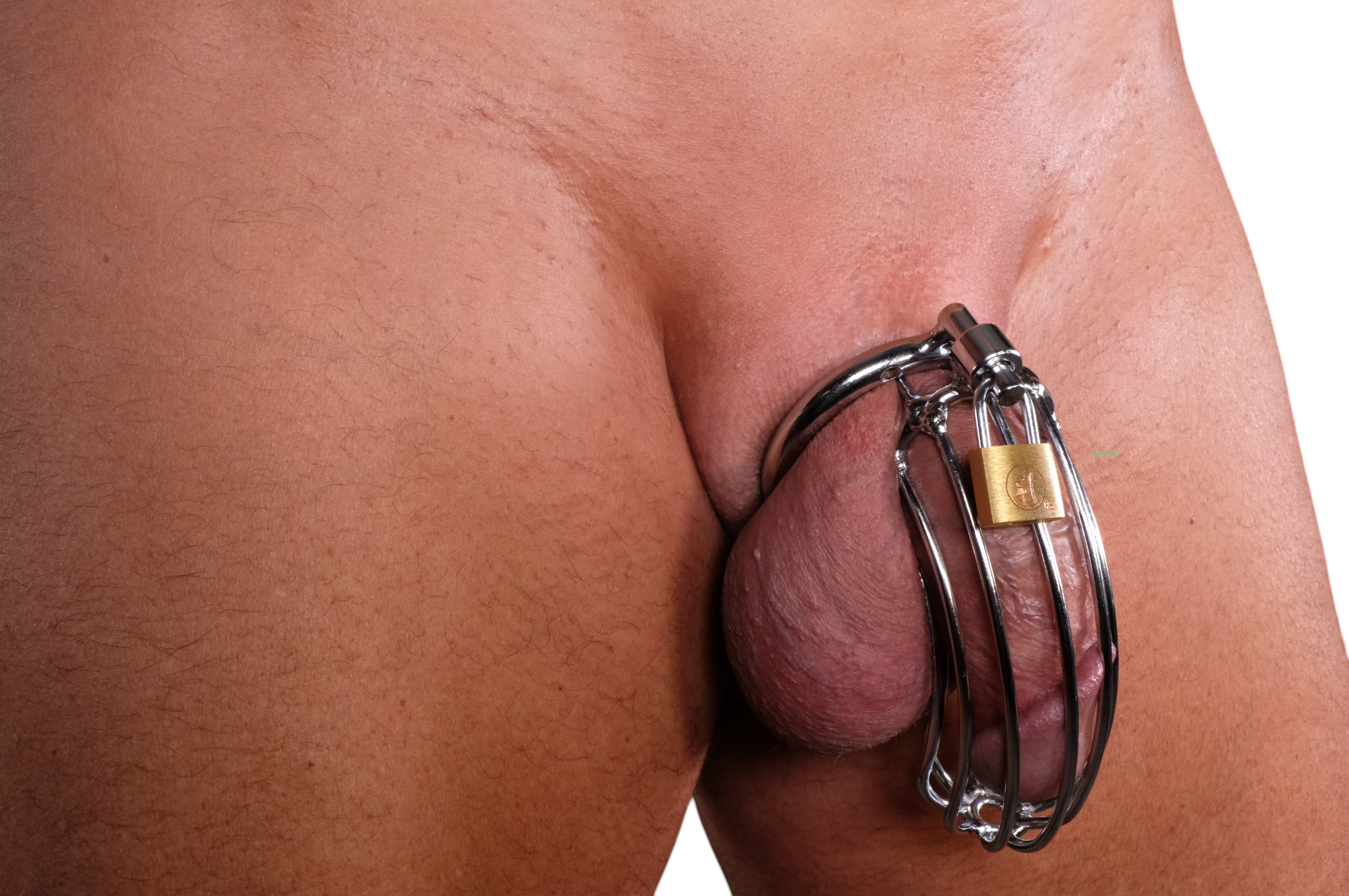
The Reasons Why Guys Wear Male Chastity Cages: Understanding the Attraction, Psychology, Pleasure, and Lifestyle
Why More Men Are Exploring Male Chastity, from Personal Curiosity and Relationship Dynamics to Feminization, Self-Discipline, and the Enjoyment of Wearing a Cage
Male chastity cages are among the most unusual and fascinating products in the world of men’s intimate accessories. For someone who has never worn one, the idea of voluntarily placing their penis inside a device that restricts erections and access to the genitals might seem difficult to understand.
Why would a man want to wear something that limits his ability to experience sexual pleasure in the usual way?
Why would someone enjoy having his penis confined inside a small cage?
And why do some men find the experience so appealing that they incorporate chastity into their relationships, daily routines, or personal identities?
The answers are far more varied than many people realize.
Some men wear chastity cages because they enjoy the psychological experience of surrendering control. Others appreciate the anticipation and excitement associated with consensual sexual restraint. Some use cages as part of a feminization or gender-expression experience, while others enjoy the appearance of a smaller or less prominent penis.
There are men who experiment with chastity out of simple curiosity and others who incorporate it into long-term, consensual relationship dynamics.
Some prefer conventional cages that accommodate their natural anatomy. Others are attracted to micro cages, inverted designs, and specialized devices intended to create an extremely small masculine profile.
The important thing to understand is that there is no single reason men enjoy male chastity cages. The attraction can be physical, psychological, emotional, aesthetic, or a combination of several different motivations.
And for many enthusiasts, discovering which aspects they enjoy becomes part of the experience.
What Exactly Is a Male Chastity Cage?
A male chastity cage is a device designed to enclose or restrict access to the penis.
Most conventional designs feature a ring that sits around the base of the genitals and a cage or tube that extends over the penis.
The components are typically secured together with a lock or integrated locking mechanism.
The device is intended to limit direct genital access and restrict the extent of an erection.
Chastity cages are available in many different materials, including stainless steel, plastic, resin, and silicone-based designs.
They also come in a wide range of sizes and shapes.
Some are relatively large and designed to accommodate the penis in a natural resting position.
Others are shorter and more compact.
Micro cages are designed for a minimal profile, while inverted cages use specialized construction to create the appearance of an extremely small or recessed penis.
The wide variety of designs reflects the equally diverse reasons people wear them.
However, a chastity cage is not a medical device, and wearing one is not risk-free. Poor fit or prolonged pressure can cause skin injury, swelling, nerve compression, or circulation problems. The ability to remove a device promptly is essential.
Understanding the psychological appeal is one thing; choosing a device that can be worn safely is equally important.
1. The Psychological Attraction of Giving Up Control
One of the most frequently discussed reasons men explore chastity is the psychological experience of surrendering control.
For some, the appeal isn’t primarily about the physical cage.
It’s about what the cage represents.
A man who is accustomed to making decisions and maintaining control in everyday life may find it appealing to voluntarily surrender a particular form of control in a consensual intimate relationship.
In a chastity arrangement, one partner may agree to wear a cage while the other takes on the role of keyholder.
The keyholder may control access to the device according to boundaries both partners have discussed and accepted.
For someone who enjoys submission, the symbolism can be powerful.
The cage becomes a reminder of an agreed-upon relationship dynamic.
The wearer may enjoy the feeling of trusting another person with an intimate responsibility.
The keyholder may enjoy the sense of responsibility or authority involved.
But this dynamic depends on genuine consent.
Healthy chastity play involves voluntarily negotiated boundaries, the ability to withdraw consent, and immediate access to removal when safety requires it.
A partner’s authority should never override the wearer’s physical well-being.
2. The Excitement of Anticipation
Another reason some men enjoy chastity is the anticipation it can create.
In ordinary sexual experiences, desire and satisfaction may occur relatively close together.
Consensual chastity play can introduce a period of waiting.
For some people, that waiting becomes part of the attraction.
They may enjoy looking forward to an agreed-upon moment of release or simply experiencing the psychological tension associated with restraint.
The excitement comes from expectation rather than immediate gratification.
Some couples describe this as a way of introducing novelty into their relationship.
Others enjoy the feeling of anticipation without necessarily involving a partner.
Of course, the experience varies considerably.
Not everyone finds sexual restriction enjoyable, and some people experience frustration or discomfort rather than excitement.
There is also no evidence that longer periods of restraint necessarily produce greater satisfaction.
For people who enjoy this dynamic, shorter, carefully negotiated experiences may provide the psychological appeal without the additional risks of prolonged wear.
3. Male Chastity as Part of a Consensual Dominance and Submission Relationship
Male chastity is frequently associated with dominance and submission, often abbreviated as D/s.
In these relationships, partners voluntarily explore different roles involving authority, trust, and control.
A submissive man may enjoy wearing a chastity cage as a symbol of his role.
A dominant partner may enjoy being the keyholder.
For some couples, the arrangement is occasional and playful.
For others, it becomes part of an ongoing relationship dynamic.
What makes the experience appealing is not necessarily the physical restriction alone.
It may be the communication, trust, anticipation, and emotional significance surrounding the arrangement.
Some men enjoy having a clearly defined submissive role because it allows them to temporarily step away from the responsibilities and expectations of everyday life.
Others appreciate the feeling of being cared for within a structured, mutually agreed-upon dynamic.
Importantly, dominance and submission are not the same as coercion.
Both partners should understand the arrangement, agree on boundaries, and retain the ability to stop.
No one should feel pressured to wear a chastity cage to prove loyalty, love, or submission.
4. Men Who Enjoy the Appearance of a Smaller Penis
One particularly interesting reason some men explore chastity cages is their preference for a smaller masculine appearance.
Traditional expectations surrounding male sexuality often emphasize penis size.
But not every man wants to emphasize his anatomy.
Some men prefer a smaller, less prominent appearance.
They may enjoy minimal-bulge swimwear, compact underwear pouches, or clothing that creates a smoother silhouette.
For these men, micro chastity cages can have an aesthetic appeal.
A compact cage may create the appearance of a smaller genital profile beneath clothing.
Some enthusiasts enjoy the visual effect independently of any relationship dynamic.
Others incorporate it into body-image exploration or consensual role-play.
There is nothing inherently wrong with preferring a less prominent masculine silhouette.
However, the size of the cage should never be chosen solely to achieve the smallest possible appearance.
A device that compresses tissue excessively can cause significant injury.
The smallest-looking cage is not necessarily the safest or most appropriate cage for a particular body.
And a cage cannot safely or reliably produce permanent penis reduction.
5. The Attraction of Micro Male Chastity Cages
Micro chastity cages have become a distinctive category within specialty chastity products.
These devices are shorter than conventional cages and are intended to create a particularly compact appearance.
Some enthusiasts are drawn to their minimalist design.
Others appreciate how little they appear to protrude beneath clothing.
For men who already enjoy micro-bulge swimwear or minimalist underwear, the aesthetic may be familiar.
They may prefer a smooth silhouette without a pronounced anatomical outline.
Some also enjoy the symbolism of wearing a very small cage.
The attraction may involve submission, body presentation, or simply the unusual design.
But micro cages require careful consideration.
A shorter cage does not automatically mean a better fit.
Excessive compression, trapped skin, restricted circulation, and pressure against sensitive tissue can occur when a device is too small.
Comfort during a brief fitting also does not establish that a device is safe for prolonged use.
Men interested in micro cages should prioritize anatomical fit, safe removal, and the absence of pressure-related symptoms over appearance.
6. Why Some Men Are Fascinated by Inverted Chastity Cages
Inverted male chastity cages represent one of the more unconventional design categories.
Unlike traditional cages that extend outward, inverted designs use a recessed construction intended to minimize the visible projection of the penis.
The resulting appearance may be extremely compact.
For some enthusiasts, that visual transformation is the primary attraction.
They enjoy the idea of creating an almost flat masculine profile.
Others associate inverted cages with submission, feminization, or the symbolism of reducing visible masculinity.
Some simply appreciate unusual engineering and body-contouring design.
The psychological appeal can be significant for people who enjoy experimenting with appearance.
But inverted cages can also introduce additional fitting challenges.
Recessed structures may concentrate pressure on sensitive tissue or create areas that are difficult to inspect and clean.
The apparent absence of a protruding cage does not mean the device is placing less pressure on the body.
Because of these concerns, inverted designs should be approached with particular caution, especially by beginners.
They are not necessary to experience the psychological aspects of chastity.
7. Male Chastity and Feminization
For some men, chastity is connected to an interest in feminine presentation.
They may enjoy wearing feminine clothing, MTF swimwear, panties, leggings, or other designs that minimize the appearance of male anatomy.
A chastity cage may become part of that personal exploration.
Some enjoy the symbolic experience of reducing the visual prominence of the penis.
Others associate the device with a feminine or submissive role.
For a man who enjoys feminization, the appeal may involve temporarily moving away from traditional masculine expectations.
He may appreciate feeling less focused on conventional ideas of male sexual performance or appearance.
However, wearing a chastity cage does not make someone transgender, feminine, or submissive.
Those meanings depend entirely on the individual.
Some transgender women use genital-concealing garments as part of their presentation, but chastity cages are not required for gender affirmation and should not be treated as substitutes for properly designed tucking underwear.
A person can explore femininity through clothing without using any restrictive device.
And someone can enjoy chastity without having any interest in feminization.
8. Men Who Enjoy Being Feminized by Their Partners
In some relationships, chastity becomes part of a broader consensual feminization dynamic.
A man may enjoy experimenting with feminine clothing while his partner takes an active role in helping him explore different styles.
The couple might choose feminine underwear, fitted spandex clothing, or gender-fluid swimwear together.
Chastity may be incorporated symbolically into this arrangement.
For some couples, the experience is playful.
For others, it is connected to a more established dominance-and-submission relationship.
The appeal may come from feeling accepted, supported, or encouraged to explore a side of oneself that was previously private.
A partner’s involvement can make the experience feel more meaningful.
But participation should always remain voluntary.
Feminization should never be used to humiliate or pressure someone without their consent.
And a person should not feel obligated to wear restrictive devices to demonstrate commitment to a feminine identity or role.
9. The Appeal of Consensual Humiliation and Small-Penis Role-Play
Some chastity enthusiasts enjoy consensual humiliation as part of their intimate relationships.
This can include role-play centered on penis size, sexual control, or traditionally masculine expectations.
For certain people, these themes create excitement because they temporarily reverse conventional social ideas about power and masculinity.
A man who is confident and assertive in everyday life may enjoy adopting a submissive role in private.
Another may enjoy playful references to having a small penis or wearing a tiny cage.
For participants, the attraction may be psychological rather than a reflection of their actual self-worth.
The distinction between consensual role-play and harmful humiliation is essential.
Both partners should agree on acceptable language and boundaries.
Role-play should not involve unwanted degradation, threats, or emotional manipulation.
And no one should be pressured to accept comments that damage their self-esteem.
The healthiest arrangements allow participants to enjoy fantasy while maintaining respect for one another outside the agreed-upon context.
10. Chastity as a Form of Personal Experimentation
Not every man who purchases a chastity cage has a complicated psychological motivation.
Sometimes the reason is simple curiosity.
He may have seen a cage online and wondered what wearing one would feel like.
Perhaps he enjoys unusual body accessories.
Maybe he wants to understand why chastity is popular in certain adult communities.
Or he may simply enjoy experimenting with new experiences.
This kind of curiosity is common across many areas of personal expression.
People try different clothing, hairstyles, intimate accessories, and relationship activities because they want to discover what they enjoy.
Chastity can be approached with the same spirit of curiosity, provided the physical risks are understood.
Someone may try a cage briefly and decide the experience isn’t for them.
Another may discover that they enjoy the psychological symbolism.
Others may appreciate the appearance but dislike the physical sensation.
There is no requirement to continue.
Experimentation is valuable only when people remain free to decide what works for them.
11. The Desire for Structure and Self-Discipline
Some men describe chastity as a way of practicing self-discipline.
They may associate wearing a cage with following a personal commitment or maintaining a structured routine.
For these individuals, the appeal is sometimes compared with other voluntary challenges that require patience and restraint.
The device may function as a symbolic reminder of a personal goal.
However, it’s important to distinguish subjective motivation from proven health benefits.
There is no established medical evidence that wearing a chastity cage improves willpower, mental clarity, testosterone levels, or overall health.
Nor is a cage a proven treatment for compulsive sexual behavior.
Someone who wants to change unwanted habits may benefit more from behavioral strategies or professional support.
A chastity cage should not be used as a substitute for mental health treatment.
And self-discipline should never require enduring pain or physical injury.
12. The Appeal of Having a Keyholder
For some men, one of the most meaningful aspects of chastity is the relationship with a keyholder.
The keyholder may be a spouse, girlfriend, boyfriend, or another consenting adult partner.
The symbolic transfer of control can create feelings of trust and intimacy.
Some wearers enjoy knowing that their partner has agreed to participate in a private arrangement.
Others appreciate the communication and attention involved.
The keyholder may also enjoy the role, provided it is something they genuinely want.
But keyholding should never create a situation where the wearer cannot remove the device in an emergency.
A safe arrangement includes an accessible emergency removal method.
The keyholder’s role is symbolic and consensual, not an entitlement to control another person’s physical safety.
13. Chastity and Long-Term Relationships
Some couples explore chastity after years of being together.
They may be looking for a new shared experience or a way to introduce novelty into their intimate relationship.
For some, the psychological elements of chastity encourage conversations about trust, boundaries, and personal preferences.
Others find that the arrangement creates anticipation or playful interaction.
But chastity isn’t automatically beneficial for relationships.
Some partners may dislike the idea.
Others may find the practical aspects inconvenient.
And some couples may discover that the experience creates more stress than enjoyment.
The key is mutual interest.
A relationship does not become stronger simply because one partner wears a cage.
It becomes stronger through communication, trust, consideration, and respect.
If chastity contributes positively to those qualities, some couples may find it enjoyable.
If it creates resentment, anxiety, or pressure, there is no reason to continue.
14. Men Who Enjoy Chastity Without a Partner
Although chastity is frequently associated with keyholders, some men explore it independently.
They may enjoy the appearance of the device.
Perhaps they appreciate the symbolism of voluntary restraint.
Others are curious about how different cage designs feel.
Some enjoy the privacy of experimenting without involving another person.
Independent exploration can provide an opportunity to understand personal preferences before deciding whether to discuss them with a partner.
However, solo wearers must be especially careful about access to removal.
A device should never be locked in a way that prevents prompt removal.
Independent chastity play should not involve inaccessible keys, improvised locking methods, or situations where assistance would be difficult to obtain.
The ability to stop immediately is an essential safety consideration.
15. Why Some Men Prefer Chastity to Traditional Intimate Accessories
For certain enthusiasts, the appeal of a chastity cage is different from that of conventional intimate accessories.
Many accessories are designed primarily to create physical stimulation.
Chastity cages, by contrast, are often valued for restriction, symbolism, anticipation, or appearance.
The psychological experience may be more important than any direct physical sensation.
Some men enjoy the reminder that they are participating in a private agreement.
Others appreciate the unusual silhouette created by a compact cage.
And some find the experience interesting because it changes their expectations about sexuality and control.
This doesn’t mean chastity is inherently more satisfying than other activities.
It simply offers a different type of experience.
Personal preferences vary widely.
16. Why Men of Different Sexual Orientations Enjoy Chastity
Male chastity is not exclusive to any particular sexual orientation.
Straight men may explore it with female partners.
Gay men may incorporate it into relationships with male partners.
Bisexual men may enjoy it for similar reasons.
And some people who identify as asexual may be interested in nonsexual aspects of restraint or symbolism, although many have no interest in chastity devices at all.
The motivations are not determined by sexual orientation.
A straight man can enjoy submission.
A gay man can enjoy being a keyholder.
A bisexual man can prefer micro cage designs.
And someone who enjoys feminization may identify with any sexual orientation.
The device itself doesn’t define the wearer.
17. Why Some Men Wear Chastity Cages Beneath Everyday Clothing
For some enthusiasts, the private nature of chastity is part of its appeal.
They may enjoy knowing that they are wearing an unusual accessory beneath otherwise ordinary clothing.
The experience can feel like a private form of self-expression.
This is similar to how some people enjoy wearing unconventional underwear or specialized clothing that nobody else sees.
However, wearing a cage during daily activities introduces practical risks.
Walking, sitting, exercising, and changing body position can create friction or pressure.
A device that feels comfortable while standing still may become uncomfortable during movement.
Moisture and limited ventilation can also contribute to skin irritation.
Extended wear should not be assumed safe simply because a cage is marketed as suitable for daily use.
Regular removal, cleaning, and skin inspection are important, and any discomfort should be taken seriously.
18. Can You Sleep in a Male Chastity Cage?
Some enthusiasts are interested in overnight wear because they want the experience to continue beyond a brief session.
However, sleeping in a chastity cage can introduce additional risks.
Natural nighttime erections may cause pressure against the device.
A person who is asleep may not immediately notice developing discomfort, swelling, or circulation problems.
For these reasons, overnight wear is not a good starting point and may be unsafe, particularly with restrictive micro or inverted designs.
A device marketed for long-term or overnight use is not automatically safe for every wearer.
Anyone considering prolonged wear should discuss relevant concerns with a qualified healthcare professional, particularly if they have circulation problems, reduced sensation, urinary difficulties, or a history of genital injury.
No psychological benefit justifies risking tissue damage.
19. The Importance of Choosing the Right Cage
Because chastity cages come in so many different designs, selecting an appropriate fit is essential.
A conventional cage may be more forgiving than an extremely compact design, but any poorly fitted device can cause problems.
Material quality matters.
Smooth surfaces, accessible cleaning areas, and reliable removal mechanisms are important considerations.
The cage should not pinch, trap skin, or interfere with normal urination.
A device that causes persistent pressure, numbness, swelling, discoloration, or pain should be removed immediately.
If removal is difficult or symptoms persist, prompt medical attention is necessary.
For beginners, it is generally better to avoid highly restrictive designs and extended wear.
There is no reason to begin with the smallest or most complicated cage available.
20. Why Specialty Chastity Stores Offer So Many Different Designs
One of the most interesting things about the male chastity market is the diversity of products.
A person browsing a specialty store may encounter traditional metal cages, lightweight plastic designs, silicone models, micro cages, inverted styles, and numerous variations in construction.
At Koalaswim.com, our male chastity collection reflects the wide range of interests among customers who explore these products.
Some are looking for conventional designs.
Others are fascinated by compact or inverted cages.
Some prefer a particular material or appearance.
And others are exploring chastity as part of a broader interest in feminine clothing, body-contouring swimwear, or alternative gender expression.
The variety exists because different customers are seeking different experiences.
No single cage can satisfy every preference.
And not every design is suitable for every body.
The best choice should be guided by fit, comfort, construction, and safety rather than the most extreme appearance.
21. The Emotional Side of Male Chastity
It is easy to focus on the physical appearance of chastity cages and overlook the emotional experiences associated with them.
For some men, wearing a cage represents trust.
For others, it symbolizes submission.
Some enjoy the private sense of participating in an unusual lifestyle.
Others appreciate the opportunity to explore feelings about masculinity, control, or vulnerability.
And some discover that the experience helps them communicate more openly with their partners.
These emotional reactions are highly individual.
A cage that feels meaningful to one person may seem uncomfortable or unappealing to another.
Neither response is wrong.
The important thing is understanding your own motivations rather than assuming you should enjoy something because other enthusiasts do.
22. Is Male Chastity Becoming More Popular?
Male chastity has become more visible through specialty retailers, online communities, social media, and discussions of consensual alternative relationships.
The availability of different cage designs has also expanded, giving interested adults more opportunities to learn about the products.
Micro and inverted cages have attracted particular attention within some specialty communities.
However, reliable population-level data about how many men wear chastity cages are limited.
It would be misleading to claim that most men are interested in chastity or that a particular design has become universally popular.
What is clear is that chastity is no longer discussed only in obscure specialty circles.
More information and product variety are available than in the past.
That visibility can help people understand the subject without assuming that everyone who wears a cage has the same motivations.
23. Is Wearing a Chastity Cage Healthy?
This is an important question.
Chastity cages do not provide established medical health benefits.
They can also create physical risks, especially when worn for extended periods or when poorly fitted.
Potential complications include skin irritation, abrasions, swelling, pressure injuries, urinary problems, and restricted circulation.
More serious complications can occur if a device becomes stuck or causes prolonged compression.
Some materials may also cause allergic reactions or irritation.
Anyone experiencing pain, numbness, discoloration, swelling, or difficulty urinating should remove the device promptly.
If the device cannot be removed, or if severe symptoms develop, urgent medical attention is appropriate.
People with diabetes-related sensory changes, impaired circulation, urinary conditions, or other relevant medical concerns should seek professional advice before considering these products.
The psychological appeal of chastity does not eliminate its physical risks.
24. Do Men Ever Stop Enjoying Chastity?
Certainly.
Some men try chastity once and decide it isn’t for them.
Others enjoy it occasionally but have no interest in making it a regular activity.
Some participate for years and eventually move on to other interests.
Preferences can change.
Relationships change.
Bodies change.
And what feels enjoyable at one stage of life may become less appealing later.
There is no obligation to continue wearing a chastity cage simply because it was once part of your lifestyle.
The freedom to stop is just as important as the freedom to experiment.
25. The Biggest Misconceptions About Men Who Wear Chastity Cages
Perhaps the biggest misconception is that all men who wear chastity cages are alike.
They aren’t.
Some are straight.
Some are gay or bisexual.
Some enjoy dominance-and-submission dynamics.
Others have no interest in those roles.
Some are fascinated by micro and inverted designs.
Others prefer conventional cages.
Some connect chastity with feminization.
Others enjoy a strongly masculine identity.
Some explore chastity with partners.
Others experiment independently.
And many people who are curious about chastity never decide to wear a cage at all.
The motivations are too varied to fit into one stereotype.
Another misconception is that wearing a cage makes someone weak, less masculine, or incapable of controlling themselves.
None of those assumptions is justified.
A person’s interest in consensual intimate activities doesn’t determine their strength, confidence, sexual orientation, or gender identity.
Final Thoughts: Why Do Guys Really Wear Male Chastity Cages?
After exploring the many reasons men become interested in chastity, one thing becomes clear.
The attraction is rarely just about the cage itself.
For some, it’s the psychology of surrendering control.
For others, it’s the anticipation associated with consensual restraint.
Some enjoy the trust involved in a keyholder relationship.
Others appreciate the appearance of a smaller or less prominent penis.
Some are drawn to micro and inverted cage designs.
Others incorporate chastity into feminization, crossdressing, or gender-expression experiences.
And some are simply curious about an unusual accessory.
There is no single explanation.
What one man finds exciting, another may find completely unappealing.
And that’s perfectly normal.
The diversity of motivations is what makes male chastity such an interesting subject.
But there is one principle that should apply to every form of chastity exploration.
It should always be voluntary, consensual, and approached with an understanding of the physical risks.
No one should be pressured into wearing a cage.
No one should endure pain to satisfy a partner.
And no one should assume that a device is safe simply because it is marketed for prolonged wear.
For those who enjoy the psychological or aesthetic aspects of chastity, the experience can be a meaningful part of their private lives.
For others, it may remain nothing more than an interesting curiosity.
Both are perfectly reasonable.
At Koalaswim.com, we appreciate that customers have many different interests, from conventional male chastity designs to specialized micro and inverted styles.
Our goal is to offer variety while recognizing that every person has different preferences, expectations, and physical needs.
Whether someone is interested in the symbolism of submission, the appearance of a compact cage, the excitement of consensual role-play, or simply learning more about chastity, the decision to explore belongs to them.
Male chastity isn’t about one type of man or one type of relationship. It’s about the many different reasons adults may find voluntary restraint, unusual body presentation, and personal experimentation appealing.
And perhaps that is the most interesting answer to the question of why men wear chastity cages.
For some, it’s about control.
For others, it’s about giving up control.
For some, it’s about appearance.
For others, it’s about trust, curiosity, or self-expression.
The cage may be the same kind of product, but the meaning behind wearing it can be completely different for every man.