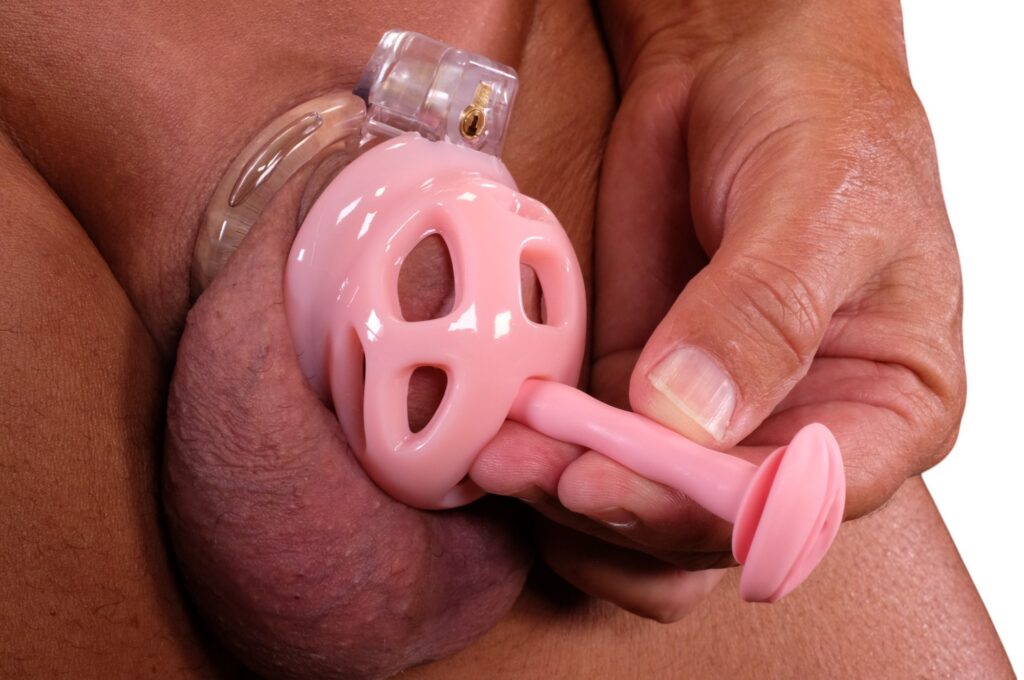
Understanding Male Chastity Cages: Why Men Start Wearing Them and Why Many Women Are Interested in the Dynamic
Male chastity cages are one of the most discussed—and often misunderstood—tools in modern relationship, kink, and power-exchange culture. To outsiders, the idea can seem extreme or confusing: why would a man voluntarily lock his genitals in a device that restricts erection, sexual release, or spontaneous stimulation? And why do so many women, especially in certain relationship dynamics, find the idea appealing?
The reality is far more psychological, emotional, and relational than most people assume.
For many couples and individuals, male chastity is not simply about denial—it can be about trust, intimacy, discipline, erotic control, emotional connection, or exploring power in consensual ways.
What Is a Male Chastity Cage?
A male chastity cage is a device worn around the penis, typically designed to:
- Restrict erections
- Limit direct stimulation
- Prevent masturbation
- Create controlled sexual access
Most devices include:
- A ring around the base
- A cage section enclosing the penis
- A locking mechanism
Some are used short-term for fantasy or experimentation, while others are worn longer as part of relationship agreements or lifestyle choices.
Why Do Men Start Wearing Chastity Cages?
There is no single reason. Men are drawn to chastity for a wide range of personal, sexual, and psychological motivations.
1. Curiosity and Exploration
For many men, it starts with curiosity.
They may wonder:
- What does controlled arousal feel like?
- Could surrendering control heighten desire?
- What happens psychologically when release is restricted?
For some, chastity is a form of self-experimentation—testing limits, discipline, and erotic psychology.
2. Submission and Power Exchange
One of the most common motivations is consensual dominance/submission (D/s) dynamics.
For submissive men, chastity may symbolize:
- Surrender
- Devotion
- Obedience
- Erotic vulnerability
The act of giving a partner control over sexual access can feel intensely meaningful, especially for men drawn to psychological submission.
3. Strengthening Focus and Discipline
Some men describe chastity as a way to:
- Reduce compulsive masturbation
- Increase focus
- Build anticipation
- Redirect sexual energy
- Deepen emotional connection
In this context, chastity can function similarly to delayed gratification practices—turning desire into heightened awareness.
4. Intensified Sexual Experience
Many wearers report that restricted access can amplify:
- Anticipation
- Arousal
- Sensitivity
- Emotional intensity
For some, orgasm denial or delayed release creates stronger eventual experiences.
5. Relationship Ritual or Bonding
For couples, chastity can become a ritualized form of connection:
- Symbol of trust
- Shared kink
- Playful teasing
- Emotional accountability
In these cases, the device may be less about punishment and more about structure or erotic teamwork.
Why Are So Many Women Interested in Chastity?
Not all women are, of course—but for those who are, the appeal often centers on relationship dynamics rather than simple control.
1. Power Reversal
Traditional sexuality often assumes men are the primary pursuers or sexually dominant partners.
Chastity can reverse that dynamic.
For some women, this reversal can feel:
- Empowering
- Playful
- Erotic
- Emotionally satisfying
It may allow women to feel more in charge of pace, attention, and intimacy.
2. Increased Attention and Devotion
Some women report that chastity-focused men often become:
- More attentive
- More affectionate
- More focused on partner pleasure
- More communicative
Whether psychological or practical, the structure can shift attention away from self-focused gratification and toward relational engagement.
3. Erotic Teasing and Psychological Control
For women interested in dominance, chastity can create a consensual framework for:
- Teasing
- Delayed gratification
- Reward systems
- Behavioral play
This can be intensely erotic for both partners when built on trust.
4. Symbolic Commitment
Some couples view chastity as symbolic:
- “Your pleasure is shared.”
- “We control this together.”
- “Sexual energy belongs within the relationship.”
This can create feelings of exclusivity or intentionality.
5. Emotional Security
In some relationships, chastity may reduce anxiety around:
- Porn use
- Excessive masturbation
- Sexual impulsivity
While it is not a universal solution, some couples use it as part of negotiated boundaries.
Common Misconceptions
“It’s always humiliating.”
Not necessarily. While humiliation can be part of some dynamics, many couples approach chastity through:
- Trust
- Romance
- Discipline
- Service
- Intimacy
“Only submissive men wear cages.”
Not always. Some men use chastity for self-control, novelty, or mutual exploration.
“Women who cage men dislike male sexuality.”
Often the opposite—many enjoy shaping, intensifying, or structuring sexual energy rather than eliminating it.
Psychological Themes Behind Chastity
Male chastity often taps into deeper themes:
Control:
Who decides when desire is acted upon?
Anticipation:
How does delayed pleasure affect arousal?
Identity:
How does surrendering or holding control change self-perception?
Trust:
Can vulnerability strengthen intimacy?
Types of Women Drawn to Chastity Dynamics
While every person is different, women interested in chastity may include:
Dominant personalities:
Enjoy leadership and erotic authority.
Curious partners:
Interested in experimenting with structure.
Women seeking attentiveness:
Appreciate redirected focus.
Kink-aware partners:
Interested in consensual power exchange.
Playful explorers:
View it as adventurous relationship experimentation.
Challenges and Realities
Chastity is not automatically easy.
Potential challenges include:
- Physical fit issues
- Hygiene considerations
- Communication breakdowns
- Mismatched expectations
- Emotional discomfort
Successful chastity usually depends on:
- Consent
- Clear boundaries
- Proper sizing
- Communication
- Flexibility
Short-Term vs. Long-Term Use
Short-term:
- Weekend play
- Teasing
- Experimentation
Long-term:
- Lifestyle power exchange
- Behavioral structure
- Deep psychological kink
Not everyone wants or benefits from long-term wear.
Why Chastity Continues to Grow in Popularity
Modern openness around sexuality, BDSM, and relationship experimentation has made male chastity more visible.
Online communities, specialty products, and evolving discussions about gender and power have expanded awareness.
For many, chastity offers something increasingly valued in modern relationships:
Intentionality.
Final Thoughts
Men begin wearing chastity cages for many reasons:
- Curiosity
- Submission
- Discipline
- Erotic intensity
- Relationship structure
- Psychological exploration
Women who are drawn to caging dynamics are often interested not just in control, but in:
- Trust
- Play
- Devotion
- Emotional focus
- Power exchange
At its core, male chastity is rarely just about physical restriction.
For many people, it is about the deeper interplay of desire, anticipation, vulnerability, and connection.
When approached consensually and thoughtfully, chastity can be less about denial—and more about exploring how control, pleasure, and intimacy can take many different forms.