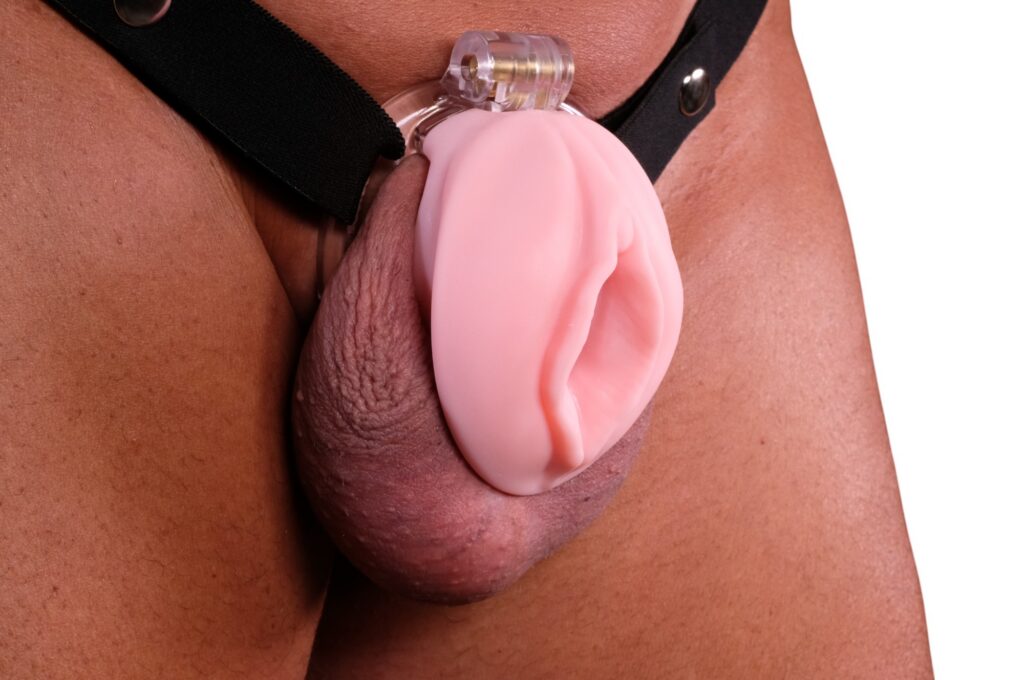
Male Chastity Cages, Humiliation, and Feminization: A Foundational Guide
Male chastity cages occupy an unusual place where sexuality, psychology, relationships, fetish, gender expression, and power exchange can overlap. For some men, a chastity cage is simply an erotic accessory used occasionally with a partner. For others, chastity becomes an ongoing lifestyle or an important part of a consensual dominant/submissive relationship.
Chastity also has a strong connection with humiliation and male feminization fantasies. Some men are attracted to the symbolism of having their penis enclosed, minimized, controlled, or made visually less prominent. When combined with feminine clothing, panties, stockings, swimwear, grooming, or other forms of gender play, the cage can become a powerful symbol of temporarily abandoning a traditionally masculine sexual role.
Understanding male chastity therefore requires looking beyond the physical device. Much of its attraction exists in what the cage represents to the wearer and their partner.
What Is a Male Chastity Cage?
A male chastity cage is a wearable device designed to enclose the penis and limit access to it. Most contemporary designs consist of a ring worn around the base and a cage or tube positioned over the penis. The components are secured together using an integrated lock, padlock, security seal, or similar mechanism.
Cages are manufactured from several materials, including:
- Stainless steel
- Polycarbonate and other plastics
- Resin
- Silicone or flexible materials
- 3D-printed polymers
They also range enormously in dimensions.
Some provide considerable space. Others are designed around a compact fit, while specialized micro and inverted chastity designs intentionally create an extremely minimized external profile.
The physical cage, however, is only half of the story.
Why Would a Man Want to Wear a Chastity Cage?
At first glance, chastity can appear contradictory. Sexuality is normally associated with gaining access to pleasure, while chastity deliberately restricts it.
For many enthusiasts, that contradiction is precisely what makes it interesting.
Restriction can create anticipation. Giving another adult control can create vulnerability. A locked device provides a constant physical reminder of an agreement or fantasy.
The psychology can therefore become more important than the cage itself.
Some men enjoy the challenge of self-control. Others enjoy consensually surrendering control to a partner. Some enjoy the appearance of the device, while others are particularly attracted to the humiliation, feminization, or submissive symbolism surrounding it.
There isn’t one universal “chastity personality.”
The Psychology of Giving Up Control
Control is central to many chastity fantasies.
In ordinary circumstances, a person decides what happens to their own body. Consensual chastity can temporarily alter that dynamic by establishing rules agreed upon by the participants.
In partnered chastity, the person who controls access is often called the keyholder.
Psychologically, handing someone the key can symbolize:
Trust. The wearer is voluntarily making themselves vulnerable to someone else.
Submission. The wearer accepts an agreed-upon power imbalance.
Anticipation. Not knowing exactly when the arrangement will end can become part of the excitement.
Attention. The cage provides a continuing reminder of the relationship dynamic.
Ritual. Locking, unlocking, inspections, rules, and other agreed routines can become part of a couple’s relationship.
For many enthusiasts, these psychological elements explain the attraction far better than the physical sensation of wearing a cage.
The Humiliation Aspect of Male Chastity
Humiliation is one of the more misunderstood aspects of chastity.
In consensual adult kink, erotic humiliation is not necessarily about genuinely believing someone is inferior. Instead, participants intentionally play with embarrassment, vulnerability, status, and taboo.
Something that would normally be embarrassing can become exciting precisely because it occurs within an agreed fantasy.
A man might find it humiliating that someone else possesses the key to his cage. Another might be embarrassed by having to acknowledge that he is locked. Someone else may enjoy wearing a particularly small cage because of what its appearance symbolically suggests.
The emotional reaction itself becomes part of the experience.
Why Can Humiliation Feel Exciting?
Humiliation can intensify vulnerability.
Consider the psychological difference between privately deciding not to do something and having an agreed rule imposed by a trusted partner.
The second situation introduces another person, another person’s authority, and the knowledge that the wearer has voluntarily surrendered some control.
For someone attracted to submission, that can dramatically increase the emotional intensity.
Humiliation fantasies can also deliberately challenge conventional ideas about masculinity.
Traditional masculine stereotypes frequently emphasize dominance, independence, physical size, sexual initiative, and control.
Chastity can symbolically reverse nearly every one of those characteristics.
Instead of control, there is surrender.
Instead of unrestricted sexual autonomy, there are rules.
Instead of emphasizing genital size, a cage may minimize the visible profile.
Instead of dominance, the wearer may deliberately adopt submission.
That reversal explains why chastity can have such psychological power for people attracted to humiliation.
The Importance of Consensual Humiliation
Humiliation works very differently when it is chosen.
Someone genuinely insulting or degrading another person against their wishes is not the same thing as two adults deliberately creating an agreed humiliation fantasy.
Healthy kink therefore depends heavily upon communication.
Partners should understand which words, themes, situations, and roles are enjoyable and which are genuinely hurtful.
A person may enjoy being teased about being locked but dislike comments about their real appearance. Someone may enjoy feminization but strongly dislike another particular humiliation theme.
Consent isn’t simply permission to “do humiliation.” It involves understanding what kind of humiliation is actually wanted.
Male Chastity and Penis Minimization
One especially prominent chastity aesthetic involves making the penis appear extremely small.
This has contributed to the development of increasingly compact cages.
A traditional cage primarily restricts access. A micro cage adds another visual dimension: the penis becomes much less prominent underneath clothing.
For some wearers, this is practical. They want the cage to remain relatively inconspicuous.
For others, minimization itself is the attraction.
A tiny cage can become symbolic. It may reinforce submission, vulnerability, gender play, or a chosen departure from conventional masculine presentation.
This symbolism becomes particularly significant when chastity is combined with feminization.
Why Male Chastity Is Used in Feminization
Male chastity and feminization frequently appear together because both can challenge conventional masculine symbolism.
The penis is culturally treated as a strong marker of male sexuality. A chastity cage can alter that presentation by enclosing it, controlling access to it, and—particularly with compact designs—reducing its visual prominence.
For a man exploring feminization, that can make the cage feel like more than a restraint.
It becomes a transformation accessory.
The wearer might combine chastity with:
- Feminine panties
- Stockings or tights
- Feminine swimwear
- Dresses or skirts
- Leggings
- Shapewear
- Body-hair removal
- Makeup
- Feminine hairstyles
- Breast forms
- Gender-fluid clothing
- MTF-style clothing
The cage can become another element within the overall presentation.
Chastity as a Symbolic Separation From Masculinity
For some men interested in feminization, the psychological goal isn’t necessarily to become female.
Instead, they enjoy temporarily removing or reversing symbols they associate with masculinity.
A cage can serve this purpose particularly well.
Put a traditionally masculine-presenting man in ordinary underwear and little about his gender presentation changes.
Replace that underwear with feminine panties and the presentation changes visually.
Add smooth grooming, feminine clothing, and a compact chastity cage, and the transformation can become psychologically much stronger for the wearer.
The cage essentially becomes an unseen component of the outfit that changes how the wearer feels about everything worn over it.
Why Chastity and Panties Are Such a Common Combination
Panties and chastity cages have become a particularly common pairing within feminization play.
Part of the appeal is contrast.
A metal or polymer restraint is fundamentally mechanical, while feminine lingerie can be soft, delicate, colorful, or decorative.
Combining the two produces a striking mixture of restraint and femininity.
A compact cage can also reduce the traditional male contour underneath panties. For someone seeking a feminine silhouette, that visual change can reinforce the overall presentation.
This does not mean everyone who wears a chastity cage wants to be feminine, nor does enjoying feminine clothing mean someone wants chastity.
The overlap simply appeals strongly to a particular group of people.
Chastity, Sissification, and Feminization Fantasies
Within adult fetish culture, chastity also frequently appears in consensual sissification or feminization role-play.
The underlying fantasy usually involves a masculine-presenting person deliberately taking on an exaggerated feminine or submissive role.
Chastity can function as a symbolic milestone within that fantasy.
The psychological message becomes something like:
“My usual masculine sexual role has temporarily been put away.”
That idea can be reinforced through clothing, grooming, names, rules, rituals, and the relationship between the wearer and the person directing the fantasy.
For someone who already enjoys submissive feminization, chastity can make the role feel much more complete because the transformation isn’t limited to visible clothing.
Does Enjoying Feminization Mean Someone Is Transgender?
No.
Gender identity, sexual orientation, clothing preferences, and sexual fantasies are separate characteristics even though they can overlap.
A heterosexual cisgender man can enjoy feminization.
A gay man can enjoy chastity without having any interest in feminization.
A bisexual man might enjoy both.
A transgender woman might use completely different methods of genital presentation and have no interest in chastity whatsoever.
Someone can also discover through experimentation that feminine presentation reflects something deeper about their gender identity.
There is no reliable way to determine someone’s gender identity or sexual orientation from their interest in chastity.
Chastity as a Couples Activity
Although chastity is frequently portrayed as an extreme fetish, some couples incorporate it relatively casually.
The arrangement might last only for an evening or weekend. Other couples establish longer-term routines.
What matters is that the rules belong to the people participating.
Some couples emphasize teasing and anticipation. Others emphasize submission. Some enjoy role reversal. Others enjoy feminization or humiliation.
And some simply enjoy having a playful secret that exists between them.
The keyholder role can also be psychologically appealing because it creates a clearly defined power dynamic without requiring every aspect of the relationship to become dominant/submissive.
Someone can control chastity within the fantasy while the couple remains completely equal in everyday life.
Chastity Doesn’t Have to Be About Humiliation
Although humiliation is important to some chastity enthusiasts, it isn’t inherent to chastity.
For one couple, chastity might be romantic.
For another, submissive.
For another, playful.
For another, highly feminizing.
For someone else, it may simply be an interesting personal challenge.
This distinction matters because internet portrayals sometimes make chastity appear inseparable from humiliation, feminization, or extreme dominance.
In reality, people construct chastity relationships in many different ways.
The Appeal of Being “Locked”
Language itself illustrates the psychological side of chastity.
Enthusiasts often talk about being locked, released, or having someone else hold the key.
Those words emphasize control.
A cage sitting unlocked on someone’s body is physically similar to the same cage after a lock is closed, but psychologically the situations can feel completely different.
The click of the lock establishes a rule.
For people attracted to chastity, that moment can be one of the most meaningful parts of the ritual because possibility suddenly becomes restriction.
The device hasn’t dramatically changed.
The psychological situation has.
Why Chastity Can Become a Lifestyle
Some enthusiasts eventually move beyond occasional experimentation and incorporate chastity into their lifestyle.
The attraction may shift from novelty toward ritual.
Putting on the cage becomes normal. Following agreed rules becomes part of the relationship. The keyholder dynamic may become an ongoing form of intimacy.
Feminization can develop similarly.
Someone might initially wear panties only as part of a private fantasy and eventually discover that they simply prefer them. A person experimenting with feminine clothing may gradually become comfortable wearing gender-fluid fashions publicly.
What begins as fantasy sometimes becomes ordinary self-expression.
Other people keep everything strictly within private play.
Both approaches are valid.
Safety and Responsible Chastity
Because chastity cages interact with sensitive tissue, fit and hygiene are important.
A cage should not produce persistent numbness, severe pain, unusual discoloration, loss of sensation, wounds, significant swelling, or difficulty urinating.
Any of those are reasons to remove the device and address the problem.
New users should begin conservatively rather than immediately attempting prolonged wear.
Regular cleaning is essential because moisture and bacteria can accumulate around enclosed skin.
The wearer should also maintain a practical way of removing the device when necessary. Emergency access is particularly important when experimenting with unfamiliar equipment.
Devices marketed as “smaller” or “more restrictive” should not be treated as automatically better. Anatomy differs substantially between individuals, and a safe fit matters more than achieving a particular appearance.
Communication Is the Foundation
The most successful chastity arrangements generally begin with a conversation rather than a lock.
Partners should discuss what each person actually wants.
Is chastity primarily about anticipation?
Submission?
Feminization?
Humiliation?
Relationship intimacy?
Role reversal?
Or simply curiosity?
The answer determines how the experience should be structured.
Boundaries should also be discussed before the fantasy begins, especially when humiliation is involved.
A teasing remark that one person finds exciting could genuinely upset another person.
Knowing the difference is essential.
Why Male Chastity Continues to Fascinate Men
The continuing popularity of male chastity makes more sense when it is understood as psychological rather than purely mechanical.
A very small device can carry an enormous amount of symbolism.
It can represent surrender.
Trust.
Restriction.
Anticipation.
Vulnerability.
Submission.
Humiliation.
Feminization.
Or simply the excitement of doing something dramatically different from ordinary sexual expectations.
For men interested in feminization, the symbolism can become particularly powerful because chastity temporarily changes the relationship between masculinity, sexuality, and the body.
The penis—normally treated as one of the most obvious symbols of male sexuality—is enclosed and may become visually minimized. Feminine clothing can then become more prominent in the wearer’s presentation.
For someone who enjoys that transformation, the psychological effect can be substantial.
Final Thoughts
Male chastity cages are much more than locking devices.
Their popularity comes largely from the stories and meanings people attach to them.
One wearer sees discipline.
Another sees submission.
Another sees trust.
Another sees humiliation.
Another sees feminization.
And someone else simply sees an unusual and exciting form of adult experimentation.
The connection between male chastity, humiliation, and feminization is particularly strong because all three can deliberately reverse traditional expectations about masculine sexuality. Control becomes surrender. Sexual availability becomes restriction. Masculine presentation can become feminine presentation. A prominent male silhouette can become intentionally minimized.
For consenting adults attracted to those contrasts, that reversal can be the central appeal.
Ultimately, chastity doesn’t define someone’s masculinity, femininity, gender identity, or sexual orientation. It is a tool. What gives the cage its psychological power is the meaning the wearer and their partner choose to place upon it.
And that explains one of the great paradoxes behind male chastity: the cage may be physically small, but for the people who enjoy it, the fantasy surrounding it can be enormous.